Congestion Pricing in the Second Cities
Manhattan is the wrong template. What Columbus, Portland, and San Antonio should learn from London instead.
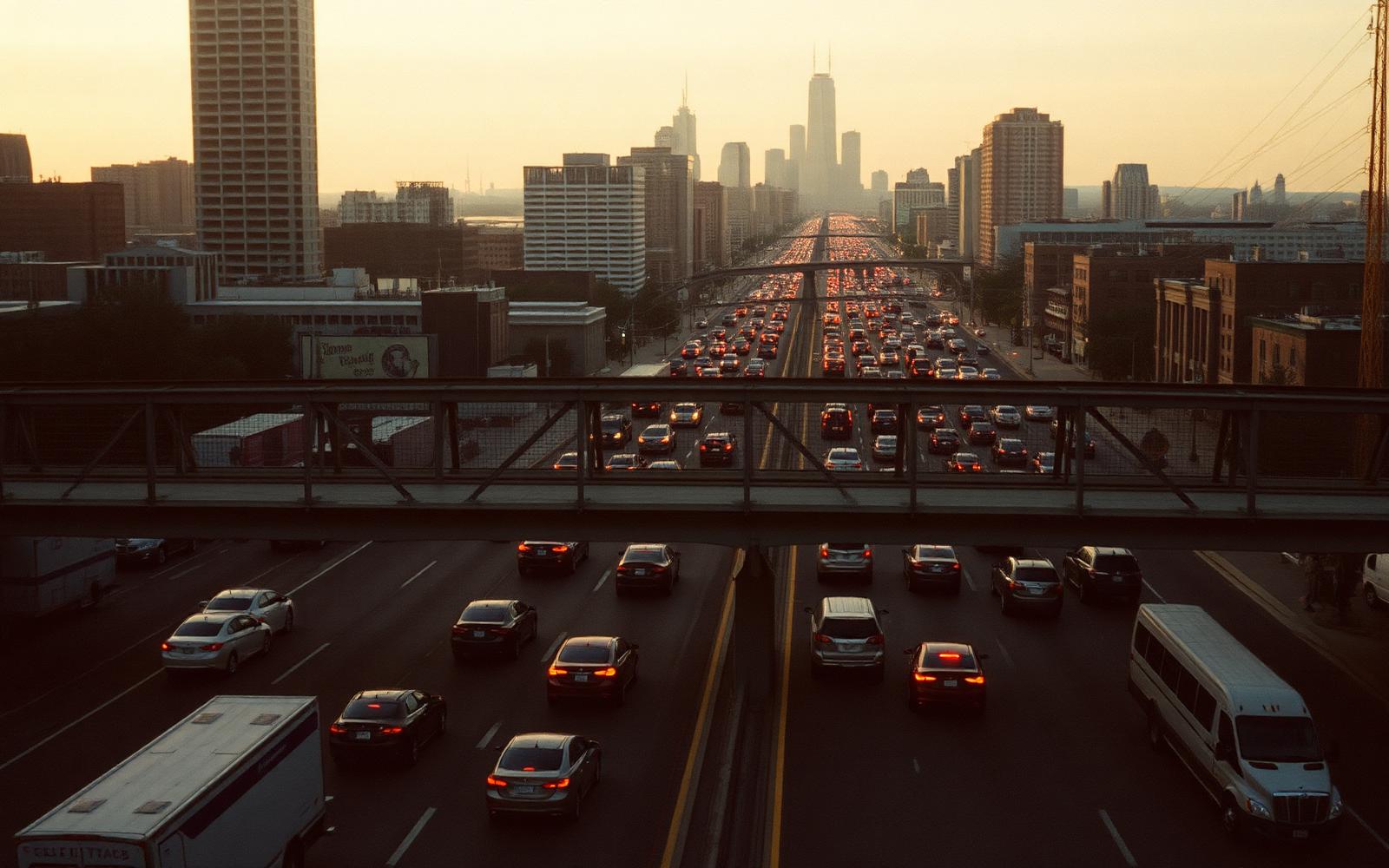
The Manhattan congestion-pricing rollout, whatever else one thinks of it, has become the American reference case for road pricing. That is unfortunate for the cities that will consider the policy next, because Manhattan is almost uniquely bad as a template. Its transit alternatives are dense, its geography is a bounded island, and its median household has been paying for parking as if it were rent for a century. None of these things describe Columbus, Portland, or San Antonio.
The better reference is London, whose 2003 charge was designed for a city that looks much more like an American second-tier metro: an urban core surrounded by a driving suburban ring, a transit network that is decent but not saturating, and a political culture that was skeptical of tolls until it was not. What London did that Manhattan did not is spend the first two years of the program aggressively reinvesting the receipts in bus service inside the ring, so that the alternative to the toll was visible before the toll took effect.
The order of operations matters. In every jurisdiction where a road-pricing program has failed politically — Edinburgh in 2005, Manchester in 2008, New York's first attempt in 2008 — the failure came from asking voters to accept the price before they could see the substitute. The programs that survived started with the substitute. They ran better buses on the corridors that the toll would price, they made the buses free or nearly free for a year, and only then did they turn on the meter.
For a Columbus or a Portland, the practical implication is that congestion pricing is not primarily a transportation-finance question. It is a transit-service question that happens to have a transportation-finance answer at the end of it. If the bus is not better on the day the toll starts, the toll will be repealed within eighteen months. If the bus is better, the toll will be quietly accepted, the way it has been in London, Stockholm, and Milan.
The Manhattan playbook — turn on the price, argue about the money later — is the wrong lesson to learn. The second-tier American cities cannot skip the service investment. They also cannot afford not to try. Congestion in Columbus is now worse per capita than it was in Manhattan in 2015. The math is not going to solve itself.
About the author
Devon Marchetti
Devon Marchetti writes on transportation and land use. His book on the postwar arterial is forthcoming from MIT Press.
More from
Transportation

The Quiet Collapse of the Bus
Devon Marchetti · 15 min
The Last Mile Was Always the First
Devon Marchetti · 8 min