The Last Mile Was Always the First
Micromobility didn't fail. Our zoning code did.
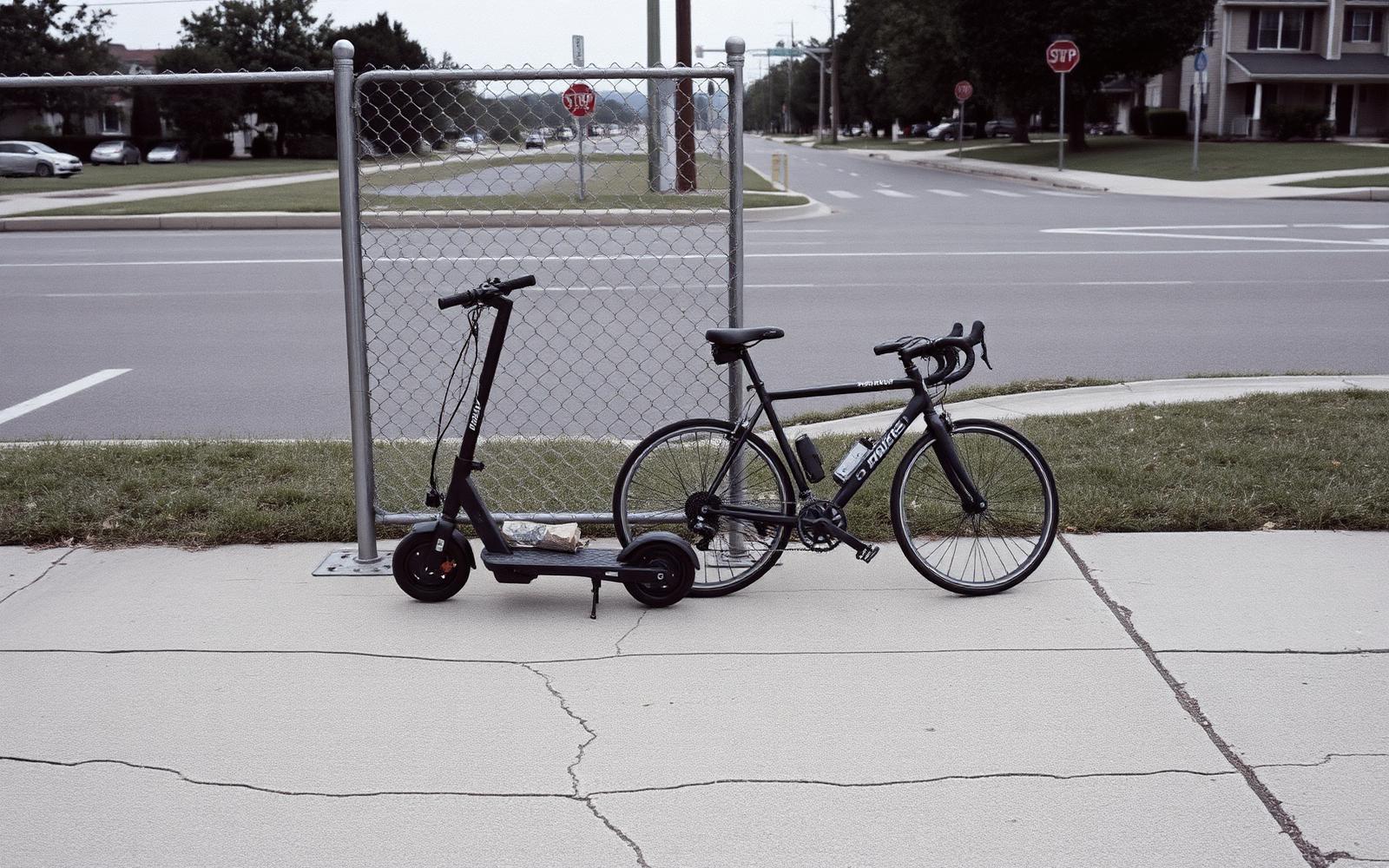
The micromobility obituaries that ran through 2024 and 2025 got one thing right and one thing wrong. Right: the venture-scale scooter companies were never going to earn back their capital at the unit economics they promised investors. Wrong: this proves that Americans do not want to make short trips on small vehicles. The evidence for the second claim is a lot thinner than the first.
In the cities where scooter and e-bike ridership held up after the venture crash — Minneapolis, Washington, Salt Lake — the common factor is not price, brand, or operator. It is that the trip is legal and physically possible along the entire route. A protected lane, or at least a road narrow enough and slow enough that the rider is not adjacent to a forty-mile-per-hour arterial, converts a scary trip into an ordinary one. Nothing about the vehicle changes.
The zoning-and-street-design story is boring but decisive. American cities separated their residential and commercial parcels far enough apart that the last mile is a mile, not a quarter of one. They then paved the connective tissue as arterial road optimized for fifty-mile-per-hour car travel. A scooter or e-bike is a rational vehicle for a half-mile trip on a street where the fastest car is going twenty. It is an unreasonable one on a stroad where the fastest car is going fifty.
The corrective is not a better scooter. It is a slower street. Every city that has made short-trip cycling durable has done it by narrowing the roadway, dropping speed limits with physical enforcement rather than signage, and building a network of low-stress routes that lets a rider get from origin to destination without a single scary block. This is expensive if measured in political capital. It is essentially free if measured in construction dollars, because most of the interventions are paint, planters, and traffic-signal timing.
The last mile was never a last-mile problem. It was a street-design problem the whole time, and the vehicles were only a symptom of what the streets would allow. The cities that figure this out will inherit the second wave of micromobility. The cities that keep waiting for a better scooter will keep watching parked ones rust beside their arterials.
About the author
Devon Marchetti
Devon Marchetti writes on transportation and land use. His book on the postwar arterial is forthcoming from MIT Press.
More from
Transportation

The Quiet Collapse of the Bus
Devon Marchetti · 15 min
Congestion Pricing in the Second Cities
Devon Marchetti · 13 min